
Various Indian State governments are now encouraging the revival of traditional alcohol. This has yielded a rise in micro-distillery culture across India. Hence this article is for the distillation column design and selection amongst various options. Do contact us if you are seeking a license of traditional alcohol spirits like Fenni in Goa, Mahua in Madhya Pradesh, Arack in Kerela, Handiya in Orissa, or a microdistillery license especially from North East India, Himachal or Uttarakhand.
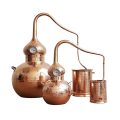
Pot Still

Almost all traditional distillation was done in Pot Still. It is simple, versatile, easy to use and produces a more flavorful sprit or distillate.
- Simple Design: Pot stills have a straightforward design consisting of a single chamber where the fermented liquid is heated and distilled. This simplicity makes them easy to set up and operate, making them ideal for beginner home distillers.
- Versatility: Pot stills are versatile and can be used to distill a wide range of spirits, including whiskey, rum, brandy, and flavored liqueurs. They allow for greater flavor retention and character in the final product due to less rectification.
- Potency: Pot stills typically produce spirits with a higher alcohol content compared to reflux stills. This can result in more robust and flavorful spirits, particularly for whiskey and rum enthusiasts who prefer a bold taste.
- Less Control: Pot stills offer less control over the distillation process compared to reflux stills. With fewer opportunities for rectification, the distiller has less ability to separate out undesirable compounds or adjust the final product’s purity.
- Traditional Aesthetic: Pot stills evoke a sense of tradition and craftsmanship, appealing to home distillers who appreciate the artistry and history behind the distillation process. They can also be visually striking as decorative pieces in a home distillery setup.
- Advantages:
- It produces a bouquet of flavors which makes it ideal for scotch whiskey, rum and brandy.
- It is a simple and low cost device,
- Its yield/productivity is also much higher than fractional distillation/reflux still.
- Its operations are also much simpler. For fractional/reflux column you need to adjust the cooling rate or temperature gradient in the column which is not needed in pot still
- If you intend to use your still for essential oils, botanicals, medicines or non-alcoholic distillation then pot still is the best solution for you.
- Disadvantages:
- Since all the vapors/steam is condensed together without any separation, it produces a bouquet of flavors rather than clean flavors. This makes it unsuitable for vodka, gin or clean spirits.
- This still operates on a batch mode rather than contious distillation. which means that it needs to be cleaned and refilled often
- The alcohol yield is 40-45% percent. If you need higher purity you need to do double or even triple distillation
- If you end up doing multiple distillation, the production time, cost, energy (heat) and wastage will be much higher.
Reflux Still:

If you are looking at a compact design for making very professional spirit then Reflux Still is your answer. It is a fractional distillation column miniaturized for your home distillation purposes.
- Efficient Purification: Reflux stills are designed for maximum efficiency in separating alcohol from other compounds through multiple distillation cycles. They incorporate a column packed with refluxing material, such as copper mesh or ceramic rings, which facilitates repeated condensation and re-distillation of vapors.
- Higher Purity: Reflux stills produce spirits with a higher degree of purity compared to pot stills. The refluxing process allows for better separation of volatile compounds, resulting in cleaner and smoother spirits with fewer impurities and off-flavors.
- Precise Control: Reflux stills offer greater control over the distillation process, allowing the distiller to adjust reflux ratios and temperatures to achieve specific purity levels and flavor profiles. This precision is advantageous for producing neutral spirits like vodka or gin.
- Versatility: While primarily used for producing neutral spirits, reflux stills can also be used to distill a variety of other spirits by adjusting reflux ratios and operating parameters. However, they may not impart as much flavor or character as pot stills.
- Compact Design: Reflux stills often have a more compact and space-efficient design compared to pot stills, making them suitable for home distillers with limited space. They can also be more energy-efficient due to their ability to recycle heat through the refluxing process.
- Advantages:
- High Purity: Reflux stills are designed for maximum efficiency 70-90% in separating alcohol from other compounds. The refluxing process allows for better separation of volatile compounds, resulting in cleaner and smoother spirits with fewer impurities and off-flavors compared to pot stills.
- Single Run: Pot Still distillers have to do 2-4 distillation cycles before they arrive at a premium product. In comparison a single reflux distillation cycle can yield you the same taste and quality.
- Precise Control: Unlike Pot Still, Reflux stills offer greater control over the distillation process, allowing the distiller to adjust reflux ratios, packing materials, and operating parameters to achieve specific purity levels and flavor profiles. This precision is advantageous for producing highly rectified spirits like vodka or gin, where purity is paramount.
- Saves Time & Energy & Less wastage: Since you distill only once rather than multiple time in a pot still distillation
- Efficiency: Reflux stills are more efficient in terms of heat and energy usage compared to pot stills. The refluxing process allows for heat recycling, where vapors are condensed and returned to the column for further distillation, resulting in reduced energy costs over time.
- Space-Efficient Design: Reflux stills are miniaturized fractional distillation columns. You get the same advantages and quality as a large distillation tower in the convenience of home/lab.
- Disadvantages:
- Complexity: Reflux stills can be more complex to set up and operate compared to pot stills, especially for beginner home distillers. They typically consist of a column packed with refluxing material, such as copper mesh or ceramic rings, which requires proper assembly and maintenance.
- Higher Cost: Reflux stills are often more expensive than pot stills due to their more intricate design and construction. The additional components and materials required for refluxing, such as packing material and condensers, contribute to higher upfront costs for home distillers.
- Limited Flavor Retention: While ideal for producing neutral spirits, reflux stills may not impart as much flavor or character to the final product compared to pot stills. The repeated distillation cycles and higher purity achieved with refluxing can result in spirits that lack the complexity and depth of flavor found in pot-distilled spirits.
- Specialized Use: Reflux stills are primarily designed for producing highly rectified spirits like vodka or gin, and may not be as suitable for other types of spirits that require more flavor and aroma retention. Home distillers interested in producing whiskey, rum, or brandy may find pot stills more suitable for their needs.

Copper vs Stainless Steel
Stainless Steel:
- Durability: Stainless steel is highly durable and resistant to corrosion, making it suitable for long-term use. It does not tarnish or react with acidic substances commonly found in distillation.
- Cleanliness: Stainless steel is easy to clean and maintain, which is essential for maintaining hygiene in distillation equipment.
- Heat Conductivity: Stainless steel has moderate heat conductivity compared to copper. While it may take longer to heat up, it retains heat well once it reaches temperature, resulting in efficient distillation.
- Cost: Stainless steel equipment tends to be more affordable upfront compared to copper. It offers a cost-effective option for home distillers on a budget.
- Neutral Flavor: Stainless steel does not react with the distillate, ensuring a neutral flavor profile in the final product. It allows the natural characteristics of the distilled beverage to shine through without imparting additional flavors.
Copper:
- Superior Heat Conductivity: Copper is an excellent conductor of heat, allowing for faster and more uniform heating during distillation. This can lead to quicker distillation times and more precise temperature control.
- Malleability: Copper unlike steel is more malleable. This means that it is easier to bend it into complex shapes and intricate designs needed for a miniaturized distillation still. Also, it can be drawn into sheets and fins which have much larger surface area for the same weight. This means the equipment will be more portable, light weight and more energy efficient.
- Chemical Reactions: Copper interacts with sulfur compounds and other impurities present in the distillate, helping to remove unwanted flavors and odors. It acts as a natural catalyst for certain reactions, contributing to smoother and more refined spirits.
- Traditional Aesthetic: Copper stills are highly prized for their traditional aesthetic appeal. They add a touch of elegance and authenticity to a home distillery setup, making them popular among enthusiasts and hobbyists.
- Potential for Patina: Over time, copper develops a natural patina or tarnish, which some people find aesthetically pleasing. However, this patina can also affect the flavor of the distillate if not properly maintained.
- Higher Initial Cost: Copper equipment tends to be more expensive upfront compared to stainless steel. However, many home distillers view it as an investment in quality and craftsmanship, considering its superior heat conductivity and ability to enhance flavor.
Other designs of Distillation Stil Pots
Fractionating Still:
Fractionating stills, also known as fractionating columns or fractionation stills, are designed to separate a mixture into its individual components through repeated distillation cycles. They typically consist of a tall column packed with fractionating material, such as copper mesh or glass beads, and are often used in combination with a pot still or reflux still to achieve higher purity and more precise separation of compounds. Unfortunately due to intecrete design, machining and need to have flow/temperature controllers at each of the wall section throughout the column this design is viable for those making 100 liter of spirit every day or more.
Boka Still:
The Boka stil is a type of fractionating still known for its efficiency and simplicity. It features a single column with a reflux condenser at the top and a product condenser at the bottom. The design allows for multiple distillation cycles and precise control over reflux ratios, making it suitable for producing high-purity spirits like vodka or gin.
Liquid Management Still:
Liquid management stills, also known as LM stills or VM stills (for liquid management or vapor management), are similar to fractionating stills but incorporate additional valves or controls to regulate the flow of liquid and vapor within the column. This allows for greater flexibility in adjusting reflux ratios and operating parameters, resulting in more precise control over the distillation process.
Hybrid Still:
Hybrid stills combine elements of pot stills and reflux stills to offer a balance between flavor retention and purity. They typically feature a pot still with a reflux column attached, allowing the distiller to produce spirits with varying levels of flavor and character depending on their preferences. Hybrid stills are versatile and can be used to produce a wide range of spirits, from whiskey and rum to vodka and gin.
Thumper Still:
Thumper stills, also known as thumpers or doublers, are an additional chamber added to a pot still set up. The thumper chamber is filled with a liquid, typically water or a mash, which is heated by the vapor from the pot still. This creates additional reflux and allows for further purification of the distillate, resulting in a smoother and more refined spirit.
You can make great Alcohol, essential oil, or botanical with either of the two distillation columns but based on your intended use, distillation style, and familiarity one should select between the two.


Ankur ji
Good Morning please see quote of alembic still with smallest working capacity available with you i.e. 1 ltr or 500ml etc at ksandips@yahoo.co.in with proforma invoice.
Hi this is the version that we recommend https://www.arishtam.com/product/pot-still-for-distillation-alcoengine/?srsltid=AfmBOopDIb2EoXfRfvY_dt1zne6Vcq0IMxrTqaSl2FyLjb6pisW0fYDm